


Torsion vs. extension garage door springs in Kansas City: when a homeowner calls us about a broken spring, one of the first things we ask is which kind of spring the door has. Most people aren’t sure, and that’s normal. The springs are up near the ceiling and you don’t think about them until the door won’t open. This guide explains how to tell the two types apart, how each one works, what tends to go wrong with each, and what to do when one fails. The photos are from two real jobs our crew did in Kansas City, KS on November 7.
Why the springs matter more than the opener
A typical garage door weighs well over a hundred pounds, and larger double doors weigh a lot more. The springs counterbalance that weight so the door can be lifted smoothly by hand or by a fairly small opener motor. When the springs are working, a properly balanced door feels light and stays put when you let go of it partway up. When a spring breaks or loses tension, the full weight of the door suddenly lands on the opener, the cables, and anyone trying to lift it. That’s why a door with a broken spring often won’t open at all, or opens a few inches and stops.
How to tell which springs you have
Stand inside the garage with the door closed and look up.
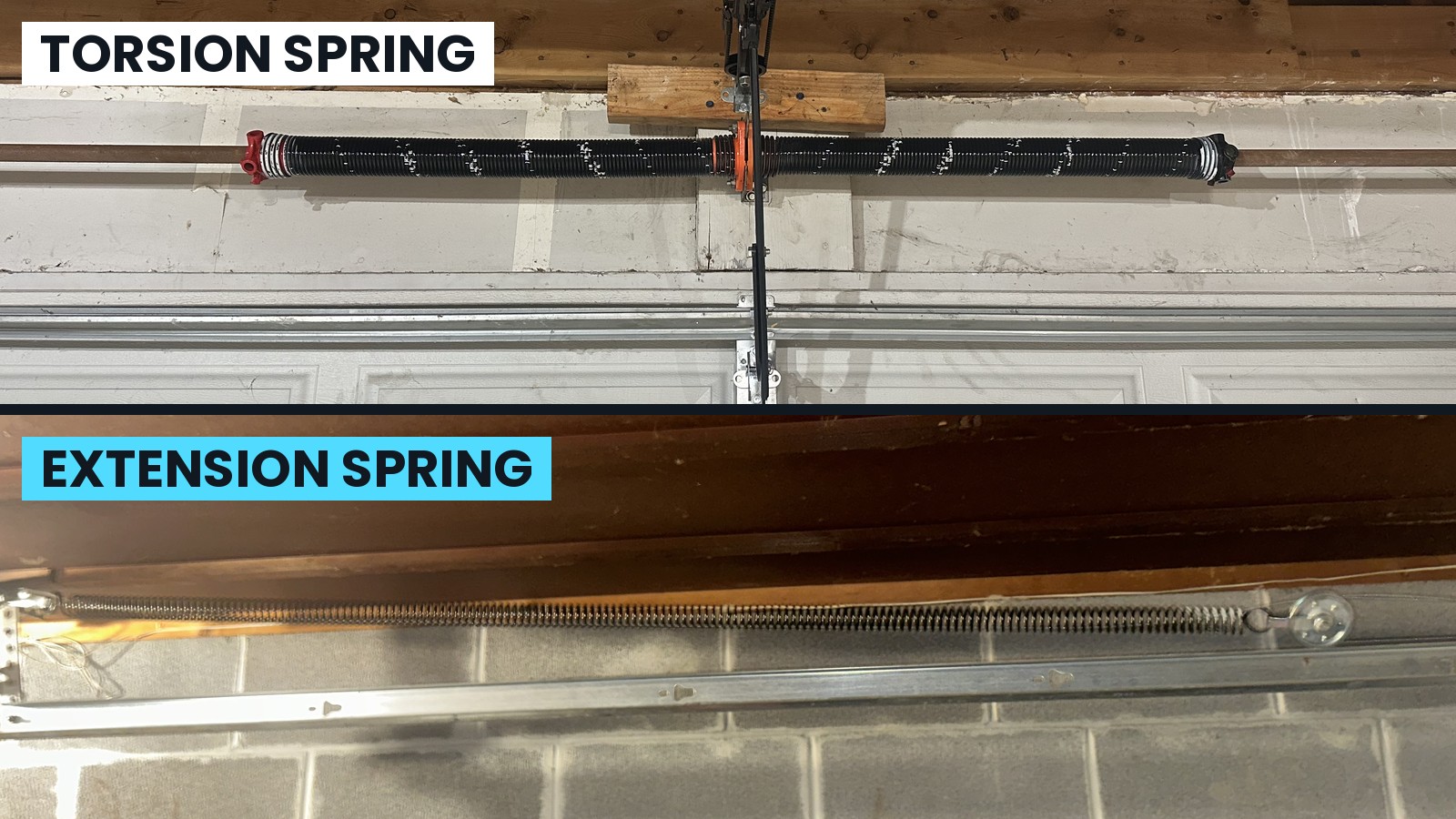
- Torsion springs sit on a metal shaft that runs across the top of the door opening, just above the door. You’ll see one or two large coils on that shaft, often with a bracket in the middle and cable drums at each end.
- Extension springs run front to back, alongside the horizontal tracks on each side of the door, roughly parallel to the ceiling. They stretch out when the door is closed and shorten when it’s open, and they usually connect to pulleys and cables.
If you see coils on a shaft above the door, you have torsion springs. If you see long springs stretched along the tracks, you have extension springs.
Torsion springs: what we saw in Kansas City, KS (66106)
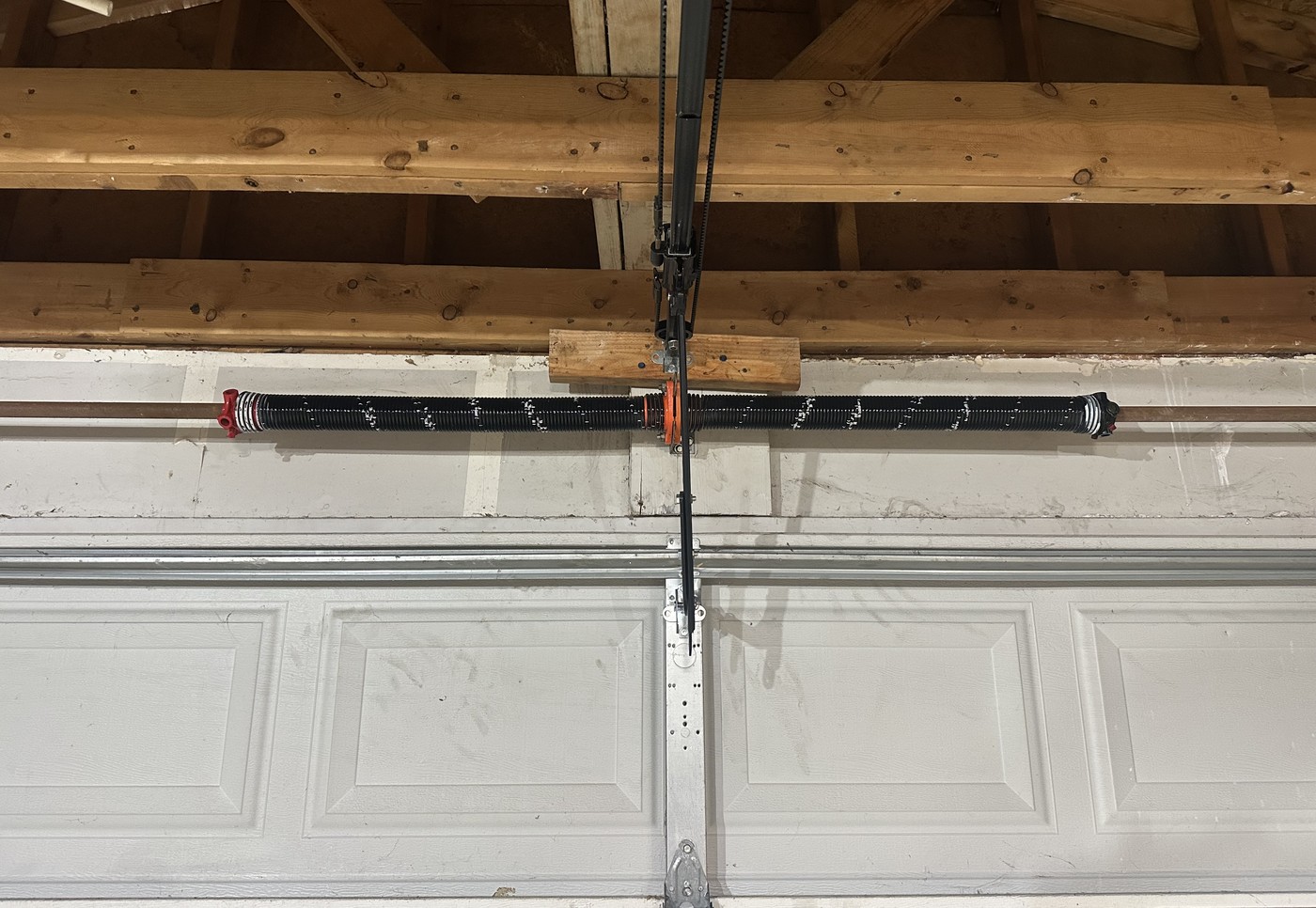
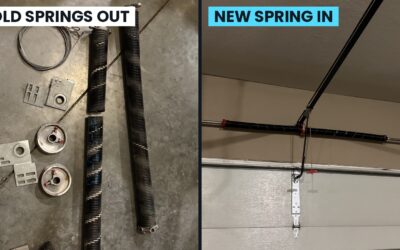
On this job in Kansas City, KS (66106), the old torsion springs had rusted from end to end. The photo above shows the new springs on the shaft after the replacement: black coils on each side of the center bracket. Torsion springs work by twisting. As the door closes, the springs wind tighter and store energy; as it opens, they unwind and lift the door through the cables and drums at each end of the shaft.
Torsion systems are common on newer and heavier doors because they tend to lift more evenly and keep the spring tension contained on the shaft. The trade-off is that they’re wound under very high tension, and adjusting or replacing them takes the right winding bars and training. When a torsion spring breaks, you’ll often see a clear gap in the coil, and many homeowners report hearing a loud bang from the garage.
Extension springs: what we saw in Kansas City, KS (66104)
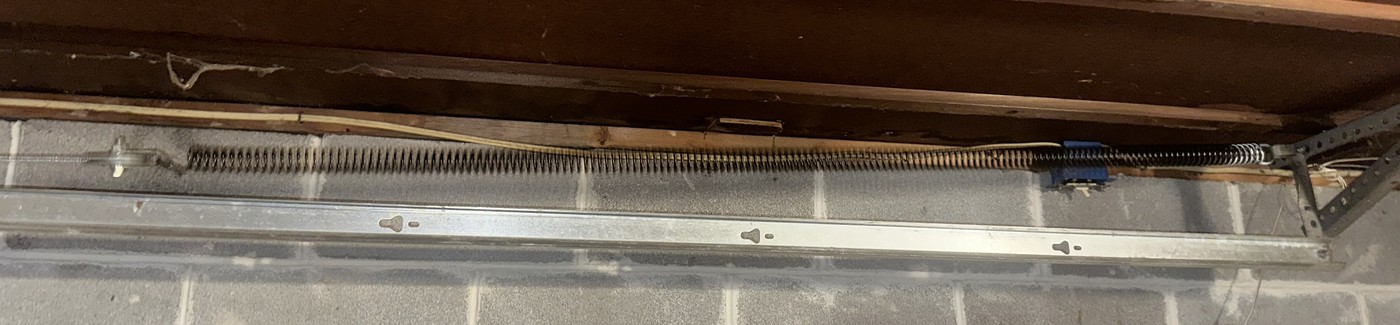
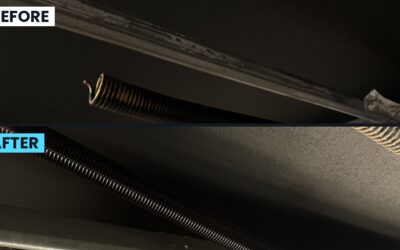
The same day, at a garage in Kansas City, KS (66104), the door used an extension spring setup. The photo above shows the old spring stretched along the track. Below is the new spring in place.
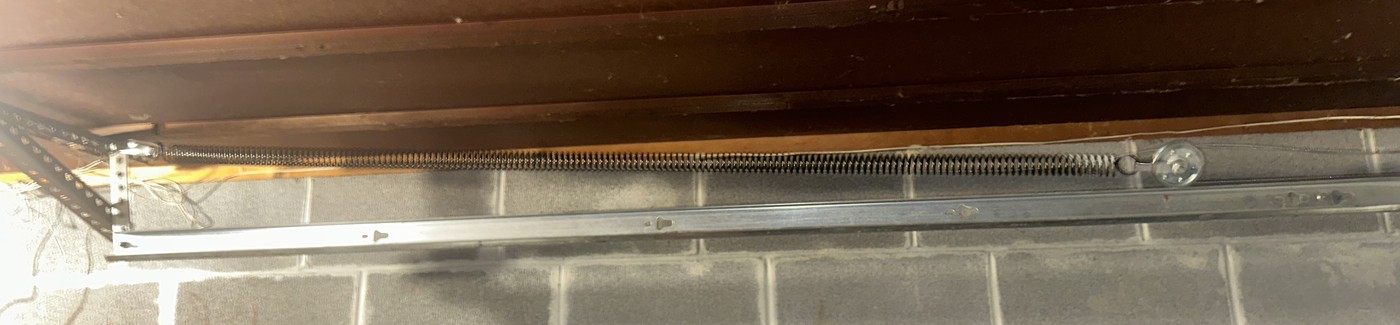
Extension springs work by stretching. When the door closes, the springs stretch out along the tracks and store energy. When the door opens, they pull back and help lift it through a set of pulleys and cables. They’re common on older homes and lighter single doors around the Kansas City area.
One important safety detail with extension springs is the safety cable, a cable threaded through the center of each spring. If an extension spring breaks without one, the pieces can whip across the garage. If you have extension springs and you don’t see a cable running through the middle of each one, mention it when you call so we can take a look.
Which type is better?
There isn’t one right answer for every garage. Both types can do the job well when they’re sized correctly for the door and kept in good shape. In general:
- Torsion springs are a common choice for heavier doors, double doors, and many newer installs. They usually give a smoother, more balanced lift.
- Extension springs are common on older and lighter doors, and they can work fine when they’re in good condition and have safety cables in place.
Sometimes, especially when a door is old or the hardware is worn out, it makes sense to talk about converting from extension to torsion or replacing the door. That’s a conversation for an on-site visit, where a technician can see the door, the headroom, and the existing hardware, not something to decide from a photo.
Why springs wear out faster in Kansas City
Every spring has a limited life measured in open-and-close cycles. A door that goes up and down several times a day uses up those cycles faster than one that’s opened once in the morning and once at night. Our weather adds to the wear. Humid summers and wet springs bring the kind of rust you can see on the old torsion springs from the 66106 job, and cold snaps make steel less forgiving. We go into more detail in why Kansas City weather is tough on your garage door.
What homeowners can safely check
- Look, don’t touch. Check the springs for gaps, heavy rust, or one spring that looks stretched compared with the other.
- Watch the door move. If it lifts crooked, jerks, or the opener strains, call before it gets worse.
- Listen. New squeaks, grinding, or a loud bang from the garage are worth a call.
- Check extension springs for safety cables. Every extension spring should have one running through it.
- Keep moving parts lubricated. A light coat of garage door lubricant on hinges, rollers, and springs during a seasonal check helps. Our November cold-weather checklist walks through it step by step.
Leave adjusting, unwinding, or replacing springs of either type to a technician. Both kinds hold a lot of stored energy, and the cables, drums, and pulleys connected to them are under tension too.
If a spring breaks
Stop using the door, don’t keep hitting the opener button, and keep people and pets away from it. Then call or text us at 913-982-7210 and tell us what you see. A photo of the springs above the door helps us know whether we’re looking at torsion or extension springs before we arrive. Our technicians carry common springs and hardware on the truck, so many spring repairs can be finished in the same visit.
Above All Garage Doors handles torsion and extension spring replacement, garage door repair, openers, and new doors across Kansas City, KS, Johnson County, and the Kansas City metro. See our services, browse real projects in our gallery, or check the areas we cover on our locations page. Free on-site estimates: call or text 913-982-7210 or reach us through our contact page.

0 Comments