

Garage Door Spring Repair in Kansas City and Johnson County
Open 24/7. Call or text (913) 982-7210
Tell us what your door is doing. Estimates are free.
A broken spring is one of the most common reasons a garage door suddenly stops working. If you heard a loud bang from the garage and now the door won't lift, or the opener hums and quits after a few inches, a spring has probably failed. Above All Garage Doors repairs and replaces both torsion and extension springs for homes and businesses across Kansas City and Johnson County, working from our offices in Kansas City, KS and Olathe.
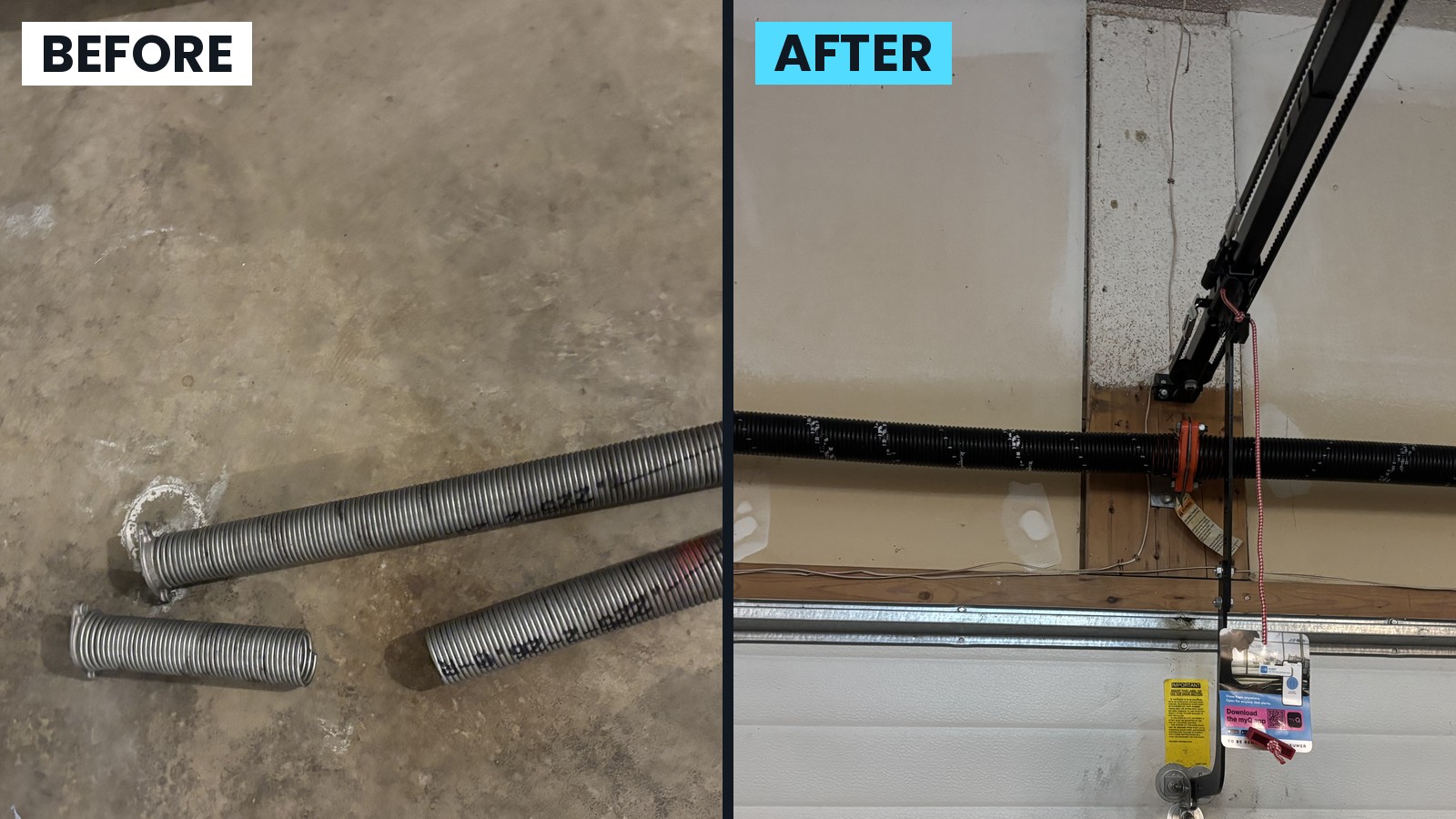
Torsion or extension: which springs does your door have?
Every spring repair starts with knowing which system lifts your door. The two types work differently, fail differently, and need different parts.
Torsion springs
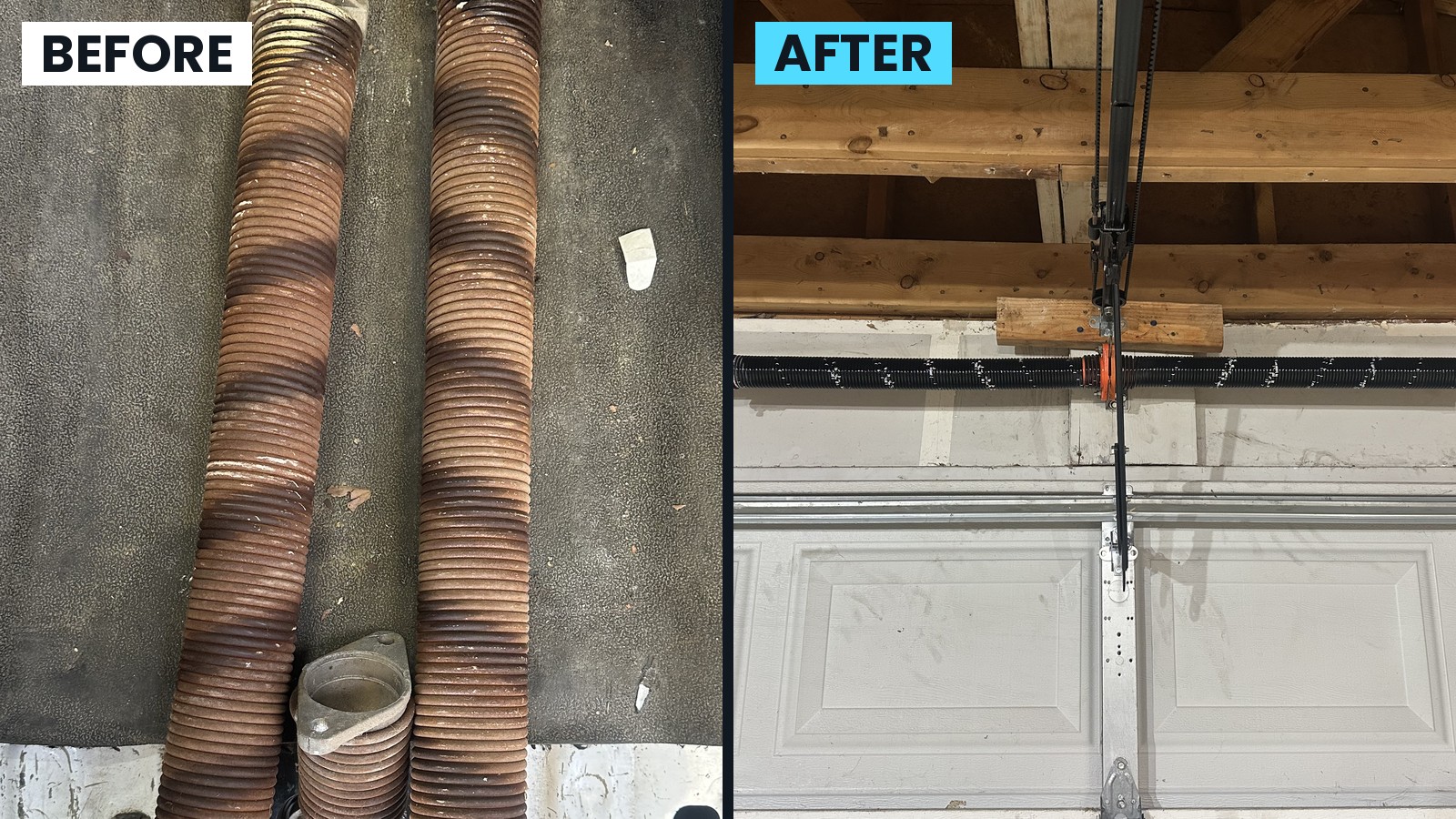
Torsion springs are large coils mounted on a steel shaft across the top of the door opening. They're wound tight, and as the door rises they unwind and turn cable drums at each end of the shaft. Most newer attached garages with insulated steel doors use one or two of them.
Extension springs
Extension springs are the long springs that run along the ceiling tracks on each side of the door. They stretch as the door closes and pull it up as it opens, working with pulleys and lift cables. You'll find them on many older homes and on single-car and detached garages around the metro.
Still not sure? Our guide on how to tell torsion and extension springs apart walks through it with photos.
Signs of a broken or worn garage door spring
- A loud bang from the garage, often when nobody was using the door
- A gap of an inch or two in a torsion spring above the door
- An extension spring that's snapped, hanging loose, or visibly longer than the one on the other side
- The opener hums, lifts the door a few inches, then stops or reverses
- The door goes up crooked, or closes much faster than it used to
- A lift cable has come off its drum or pulley, or is hanging slack
- The door feels extremely heavy or won't stay up when you lift it by hand
Springs also wear out gradually. Every open-and-close cycle fatigues the steel, and rust adds friction. A spring that squeaks, looks rusty, or shows gaps between its coils while the door is open is worth having checked before it lets go. Read more about torsion spring signs of wear and why springs often snap in cold weather. If a cable is the problem, see what to do when a cable comes off the drum.
Safety first: please don't repair springs yourself
Garage door springs store a lot of energy. Torsion springs are wound under extreme tension, and loosening a set screw or using the wrong bars can spin a winding bar with enough force to break bones. Extension springs are under the most tension when the door is closed, so unhooking one or adjusting its pulleys and cables can release that energy without warning. Hardware-store spring kits aren't sized for your door, either. A spring that's too strong or too weak throws the door out of balance and wears out the opener.
Until a technician arrives
- Stop using the opener. Running it against a broken spring can strip gears or bend the top panel.
- Leave the door where it is. Don't prop it up or force it down, and don't stand under it.
- Keep kids and pets away from the door and the side tracks.
- Don't pull the red emergency release while the door is open. Without spring support, it can drop hard.
- If your car is trapped or the door is stuck open, tell us when you call so we can plan the visit around it.
Check extension springs for safety cables
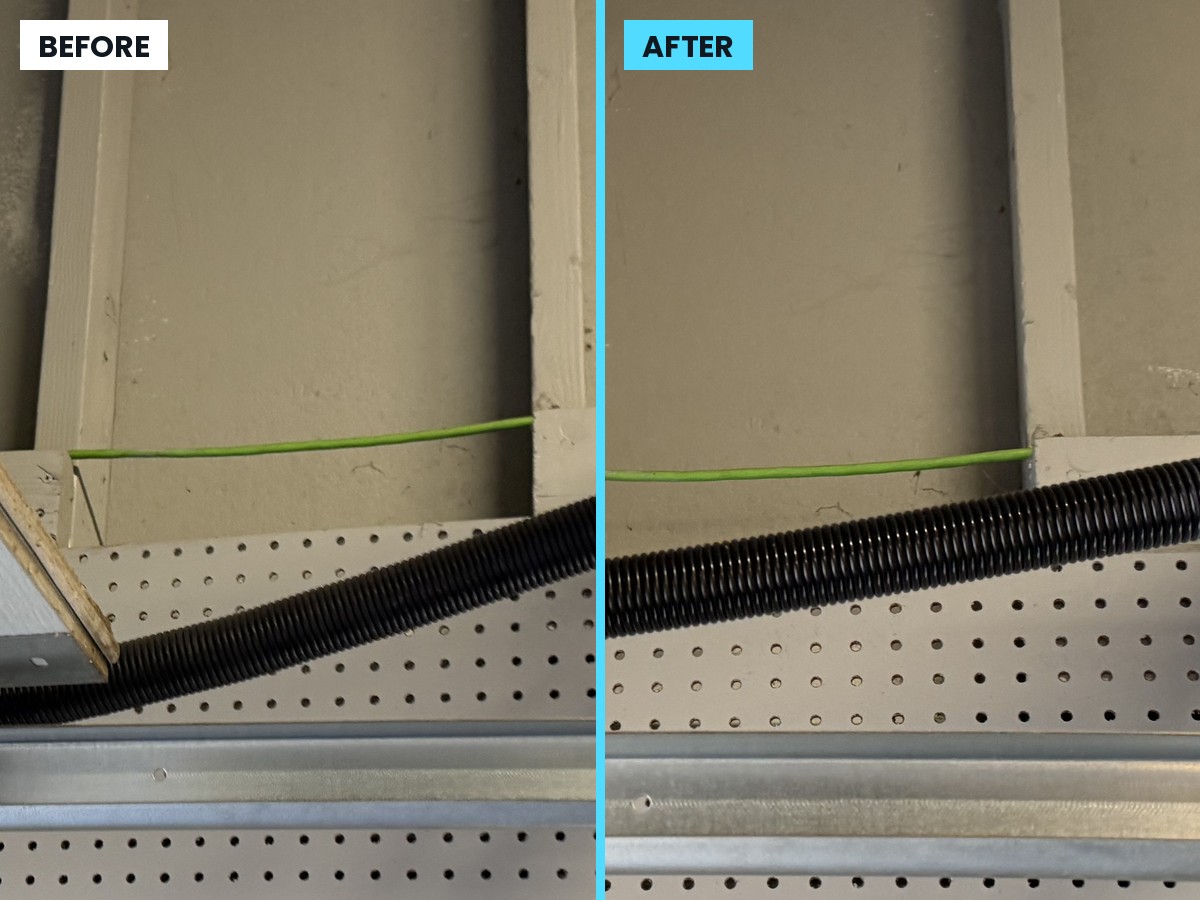
Each extension spring should have a thin steel safety cable threaded through its center and anchored at both ends. With the door closed, take a look. If a cable is missing, keep people away from the springs and ask your technician to look at it during the visit.
What happens when our technician arrives
- Confirms the appointment by phone before heading your way.
- Inspects the whole system, not just the broken spring: cables, drums or pulleys, bearings, rollers, hinges, tracks, and the opener.
- Measures the door and the old spring so the replacement matches your door's actual weight, not just the size or color code of the old part.
- Gives you a clear, free estimate before any paid work starts. If the inspection turns up a second worn spring, a frayed cable, or a bad pulley, you'll hear about it and decide before anything is done.
- Replaces the spring on the same visit when you approve and the parts are on hand. Our service vehicles are stocked for common repairs, so most jobs are finished on the first visit.
- Balances and tests the door. A balanced door stays put about halfway up when lifted by hand. The technician also checks the opener's auto-reverse and the safety sensors.
- Explains the work, takes payment, and closes out the job before leaving. We accept cash, check, card, Venmo, Cash App, or a payment link.
Why springs fail early around Kansas City
Kansas City swings between humid summers and freeze-thaw winters, and bare steel doesn't like either. Cold mornings thicken old grease and make the whole system work harder, which is often when a tired spring finally breaks. Springs, pulleys, and cables in uninsulated or detached garages tend to rust first. Read more about how Kansas City weather affects garage doors.
Weight is the other common cause. Added insulation, windows, wood-look overlays, or a replacement panel all make a door heavier. If the springs weren't resized to match, they wear out early and strain the opener. That's why your technician sizes the replacement to the actual door, not just to the old spring.
Spring repair across Kansas City and Johnson County
We serve every city in Johnson County, including Olathe, Overland Park, Leawood, Lenexa, Shawnee, Prairie Village, Merriam, Mission, Gardner, and De Soto, plus Kansas City, Kansas and Kansas City, Missouri. We also take jobs up to about 50 miles from our Kansas City, KS and Olathe offices. See our locations or check garage door repair near you.
Recent spring jobs
- Torsion spring repair in Olathe, KS (66062)
- A pair of torsion springs in Kansas City, KS (66106)
- A new torsion spring in Overland Park, KS (66204)
- Torsion spring replacement in Kansas City, MO (64158)
Garage door spring repair FAQ
How do I know if my garage door has torsion or extension springs?
Look above the closed door. If one or two large coiled springs sit on a metal bar running across the top of the opening, you have torsion springs. If long springs run along the horizontal tracks on each side of the ceiling, you have extension springs.
Can I open my garage door with a broken spring?
It isn't safe to try. Without spring support the door is extremely heavy, it can lift crooked or drop, and the opener can be damaged. Leave the door where it is and call Above All Garage Doors at (913) 982-7210. We're open 24/7.
Can you replace my garage door spring the same day?
Often, yes, when scheduling allows. Our service vehicles are stocked for common repairs, so most jobs are finished on the first visit once you approve the estimate.
How much does garage door spring repair cost?
The price depends on the door's size and weight and the springs it needs. Your technician measures the door and gives you a free estimate before any paid work begins.
What does an extension spring safety cable do?
A safety cable runs through the center of an extension spring and is anchored at both ends. If the spring breaks, the cable keeps the broken pieces contained instead of letting them whip across the garage.
Do you repair springs on commercial garage doors?
Yes. We work on both residential and commercial garage doors. You can read more about our commercial garage door services, or call (913) 982-7210 to describe the door.
Broken spring? We're open 24/7.
Tell us what your door is doing, and we'll help you plan the next step. Estimates are free, and the technician explains the price before any work starts. For other repairs, new doors, and openers, see all garage door services, or emergency garage door repair if the door is stuck open right now.
